Inside the intensely competitive arena of today's professional drifting, success is not merely exclusively a product of brute engine power or pilot courage. Rather, it has evolved into a intricate discipline that demands a meticulous blend of picking a time-tested vehicle platform, outfitting it with the most precise drift-spec components, and, most critically, understanding its dynamic characteristics on the course through cutting-edge suspension tuning applications. This comprehensive handbook will serve as your roadmap starting from the very first concept of a project car right through to the final engineering-refined refinements that elevate a capable machine into a consistent champion. We will thoroughly explore the precise engineering of car suspension tuning, demonstrating how a advanced vehicle dynamics tool like GripDial eradicates assumptions and provides exceptional visibility into your vehicle's true dynamics.
The foundation of any successful drift machine is, without question, the platform itself. Certain vehicles have achieved renowned status within the international drifting culture due to their inherent handling characteristics, robust design, and the vast range of aftermarket parts available. Selecting the optimal platform is the initial and most crucial choice a driver will make. For instance, the the E36 generation BMW is widely regarded as among the greatest all-around drift platforms of all time. Its almost ideal evenly distributed mass, combined with a driven rear axle layout and extremely reliable inline-six powerplants, establishes a platform that is simultaneously easy to handle for beginners and extremely effective in the hands of a professional pilot. The next step of this lineage, the E46 model BMW, improves on these qualities with a even more sophisticated structure, increased track for enhanced high-speed stability, and still more lock straight from the OEM. A different dominant platform in the professional circuit is the C6 generation Corvette.
This V8-powered performance car introduces a particular array of advantages to the drifting sport, including a light aluminum structure, a transaxle-style transaxle that helps create an excellent weight distribution, and the immense low-end power of a big LS V8 motor. This blend renders it an utter force on track, designed of initiating and maintaining long drifts with apparently easy use of throttle. For builders looking for outstanding value, the 350Z model Nissan stands out as a top-tier choice. It arrives from the factory with a stiff chassis, a decent factory limited-slip differential, and the smooth V6 motor that provides ample power and torque for practicing and advancing in the activity. Its newer version, the Nissan 370Z, offers more refinements in chassis stiffness, steering geometry, and peak powerplant power, establishing its position as a favorite choice among professional drivers. Other legendary vehicles that deserve mention encompass the agile Wankel-engined Mazda FC RX-7, the most popular S13 Silvia/240SX, the American Ford SN95, the modern BMW E90, and the compact yet unbelievably engaging and instructive Mazda Miata. All of these chassis offers a unique set of traits, challenges, and capabilities, but they all possess the fundamental elements necessary to become a competitive drift car.
However, selecting the correct platform is merely the first step. To access the true capability of every of these vehicles, significant upgrades to the steering geometry and suspension systems are completely mandatory. This is where the world of precision tuning parts becomes sharp view. The most most game-changing upgrade for a serious drift machine is the integration of a drift-spec drift angle kit. These sophisticated systems, like those engineered by performance brands like specialist manufacturers, are created to radically increase the vehicle's maximum steering angle. A standard street car is severely constrained in how far its tires can pivot, a safety limitation for daily operation. In sliding, but, maximum opposite lock is continuously necessary to control and maintain a slide. An angle kit replaces the factory hubs, linkages, and potentially suspension arms with parts that allow the wheels to reach degrees of turn in excess of 70 or even 80 degrees, compared to a normal stock limit of around 40 to 50 degrees.
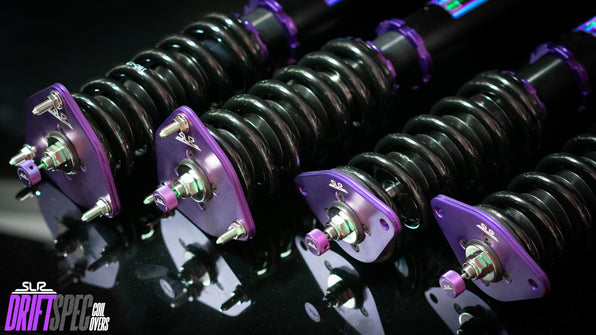
This tremendously greater lock provides the operator with significantly greater control during a angle, enabling it to be much easier to begin a drift, sustain it through a sweeping turn, and switch seamlessly from one direction to the opposite. The contrast in drivability is truly transformative. Paired with a appropriately chosen modification is the just as critical enhancement to the car's suspension. Store-bought or even expensive street dampers are simply not intended for the specific and extreme requirements of competitive oversteer. A dedicated system of adjustable dampers is paramount. These specific coilovers incorporate unique damping rates and spring strength that are tuned for the extreme weight transfer that is typical of drifting. When a pilot initiates a slide, the chassis's mass is transferred violently to the outside of the turn. Optimal drift-spec dampers control this shift in a controllable manner, enabling the vehicle to settle rapidly and providing the operator clear feel through the controls and cockpit. They also allow for exact setting of stance, damping firmness, and weight balance, which are all fundamental parts of fine-tuning the car's behavior to a specific circuit or piloting technique. As a system, a top-tier drift angle kit and a properly selected system of competition suspension units are the core hardware foundation upon which all subsequent tuning is built.
Once the core hardware is installed, the next critical phase in the build is the meticulous adjustment of the car's suspension geometry. This is the domain of chassis dynamics adjustment, a methodology that can appear intimidating to the newcomer but is, in fact, the secret to transforming a collection of fast pieces into a harmonious and controllable vehicle. The most debated element of alignment for drifting is definitely negative camber. Wheel camber is the tilt of the wheel relative to the perfectly straight line when viewed from the front of the vehicle. When the top of the tire is angled towards the car, this is called negative camber. In oversteer driving, inward-leaning wheels on the front axle wheels is widely applied and is regarded as essential. The purpose is intrinsically related to tire contact.
When a chassis is turning at extreme sideways angles, the chassis rolls to the outer of the turn. This lean causes the outer steering tire to lose its best grip area with the asphalt. By applying inward lean, the tire is pre-tilted to counteract this roll. As the chassis rolls into the corner, the outside front tire gains a better contact patch with the track, maximizing its bite at the exact point when it coilover setup tips is most required for control. Commonly, front camber settings for a dedicated sliding vehicle vary from approximately -3 degrees to as much as -5 degrees or even beyond, contingent on the specifics of the chassis configuration, tire selection, and operator feel. The rear axle wheels also employ inward tilt, but the settings are generally more modest and more nuanced than the front. Overly aggressive negative camber at the back can cause the vehicle to extremely tail-happy and challenging to control on acceleration use, as it reduces the available grip area of the driving wheels during linear acceleration. Thus, rear axle angles are commonly in the range of -1 degree to -3 degrees, achieving a delicate compromise between giving adequate cornering traction to help in entering and sustaining the angle while also keeping effective grip for exiting the turn. alignment is just one part of the larger alignment equation, which also encompasses toe setting, caster angle, and suspension-induced steering adjustment.
Toe setting describes the orientation of the wheels when viewed from above. Inward toe means the front edges of the wheels are nearer together than the trailing edges, while outward toe means the converse. For drifting, a slight amount of front axle toe out is commonly used to sharpen the turn-in directional feel, making the chassis feel more agile and willing to start a slide. Rear axle toe angle is typically set to zero or a incredibly minute amount of positive toe to promote straight-line stability under throttle. self-centering is the frontwards or backwards tilt of the suspension pivot when observed from the side-on of the car. Positive caster angle improves feedback and high-speed solidity, and it additionally increases camber effect during turning, which is highly useful. Tuning these parameters is a detailed interaction where a change to a single setting can and will influence the other settings. The traditional process for tuning a car's suspension geometry for drifting has historically been a time-consuming endeavor of experimentation and feeling. A coilover setup tips driver or engineering group would apply a modification based on intuition, run the vehicle on track, depend on the pilot's individual sensation and impressions, and then make an additional adjustment. This process would repeat time after time until the car felt "right" or the allotted practice time was exhausted. This methodology is not only exceptionally inefficient in terms of hours and resources, but it is additionally deeply imprecise.
Driver sensation is a notoriously inconsistent measurement tool, influenced by numerous elements such as fatigue, varying track grip levels, temperature, and just the focus of the operator on that particular session. What feels "tail-happy" on one pass might feel "tight" on the subsequent lap, leading to conflicting data and frustrating adjustments. This long-standing problem in car suspension tuning is precisely where contemporary engineering tools has made its mark to revolutionize the process.
The rise and adoption of sophisticated suspension tuning applications has ushered in a new era for building and refining high-performance drift machines. These systems, exemplified by innovative products like modern telemetry hardware, operate by actively recording the actual dynamic performance of the vehicle dynamics tool chassis as it is piloted on the circuit. In contrast to depending on personal impression, these tools gather objective data on essential factors such as damper compression and extension, corner velocities, acceleration forces, lock position, and driver input position. This collected data stream is then interpreted by sophisticated algorithms that can graph and interpret the metrics in a actionable way. For the first time, drivers and teams can visualize precisely what the car is exhibiting at any given moment of a drift. This function changes the entire chassis setup procedure. Consider the aforementioned task of dialing in the front axle camber for a particular chassis. Instead of introducing a adjustment from -3 degrees to -3.5 degrees and then driving many laps to try and "perceive" a change, a suspension tuning tool can give immediate and definitive data. The tool can display visually how the wheel's contact patch is acting during the most important moments of a slide: the initial flick, sustain, and changing direction. It can show if the present camber setting is permitting the outside front tire to achieve optimal grip or if the tire is over-stressed on its external edge.
The tool can then provide fact-based recommendations for change. Perhaps the information shows that the outside front tire is even overloading its edge at -3.5 degrees of negative camber, suggesting that an increase to negative camber, say -4 degrees, might be advantageous. Alternatively, the data might indicate that the tread is failing to coming up to optimal operating temp or that the inside edge is wearing excessively, which could indicate that there is overly aggressive negative camber and a slight decrease back to -3.2 degrees would be more efficient. This level of precision and useful analysis was completely unimaginable in the era of solely manual adjustment.
The benefit of employing a comprehensive suspension tuning tool goes well beyond only setting camber. It serves as an priceless suspension tuning guide that is specific to your particular chassis. When setting the shock absorber clickers on your suspension, rather than using general guidelines or replicating another car's numbers, you can employ the software to analyze how the car is reacting in relation to your changes. The tool can show the suspension travel trace over a lap, revealing if the coilovers are handling the chassis motion properly or if they are permitting the car to bounce excessively after a transition. It can help in pinpointing challenges like excessive compression or losing droop, allowing you to make data-backed adjustments to preload settings, damping values, or stance. This methodology applies similarly to the intricate task of car alignment tuning. In addition to camber, the system can offer data into how changes to toe settings and caster are affecting the chassis's balance during different phases of a drift. For instance, it can assist you to determine the ideal amount of front negative toe for your particular angle kit configuration and competition style by showing the quickness of initial reaction and the consistency of the chassis at lock steering angle. This transforms the system an exceptionally effective drift suspension tuning guide that is constantly informed by the live behavior of your own vehicle on the track. It shifts the entire process from a subjective skill into a methodical development process.
Additionally, the value of a tool like GripDial is in no way limited to professional teams with large budgets. For the club-level driver, it serves as an incredible equalizer. It in essence gives the tuner with the insight of a full-time suspension specialist without the typical cost. It speeds up the development time by providing clear solutions to challenges that would normally take seasons of trial and error to solve. A driver can learn how their particular vehicle responds to various adjustments, developing a more intuitive knowledge of suspension theory in the process. It furthermore democratizes high-level chassis dynamics concepts, enabling anyone with the drive to optimize their machine to do so in a structured and successful fashion. This is especially valuable in a sport like drifting, where engineering expertise has traditionally been a tightly held asset among top crews. Today, that capability can be in the hands of every serious driver.
In summary, the journey to constructing and optimizing the perfect high-performance sliding vehicle is a comprehensive endeavor that seamlessly integrates classic engineering wisdom with cutting-edge telemetry tools. It starts with the wise selection of a proven car, followed by the installation of essential drift-spec parts like drift-spec angle modification systems and correctly selected performance suspension units. The build then moves into the intricate realm of car suspension tuning, where values like camber, toe setting, and caster are precisely adjusted to suit the vehicle's modified geometry and the operator's individual style. The final step, and what truly separates the contemporary approach from the old ways, is the use of a sophisticated vehicle dynamics tool. This platform eliminates the uncertainty and trial and error of purely feel-based adjustment by providing quantifiable, live information on how the vehicle is truly behaving. It functions as an incredible engineering partner, a comprehensive coilover setup manual, and a all-in-one vehicle dynamics tool. In unison, this holistic methodology guarantees that all aspect of the drift machine—from the pick of the car to the final adjustment on the suspension—is optimized for peak competitiveness on the competition venue. It represents the total maturation of the discipline of oversteer driving, connecting mechanical pilot talent with data-informed vehicle setup to forge the perfect dominant vehicles attainable.